
Lived experiences of working in low-income communities

Aug 31, 2026

By Siyathemba Kunene, Ngwako Kwatala, Muthise Bulani and Caradee Wright
(Environment and Health Research Unit, South African Medical Research Council)

When people picture climate and health research, they usually imagine scientists in laboratories, or perhaps community meetings where findings are shared back with participants. Few people picture a small white or black sensor, no bigger than a matchbox, sitting quietly on a wall inside someone’s home for two years, doing the unglamorous but essential work of measuring heat.

In the SAMRC’s Climate Change and Human Health research programme, that sensor is where a great deal of our work begins. South Africa’s heat is intensifying, and its effects fall hardest on the people who can least afford to escape it. To understand how the vulnerable experience and adapt to heat, we first need reliable data – and reliable data starts with an object as ordinary as a temperature logger.

A small object with a big job

The logger we use to collect temperature and relative humidity data (also in the R-NEET study) is inexpensive by international standards, developed locally rather than imported, and remarkably capable for its size. Once installed in a participant’s home, it can passively record data for up to 24 months, needing only a battery change every six months. Low-cost does not mean unreliable – but it does mean the device is small, unobtrusive, and, as we’ve learned, easy to overlook.
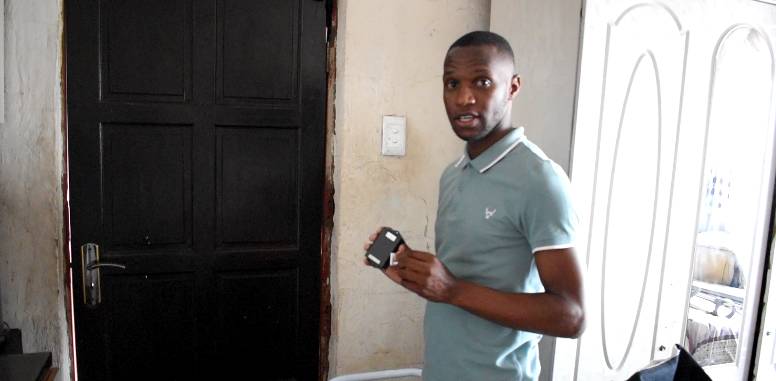
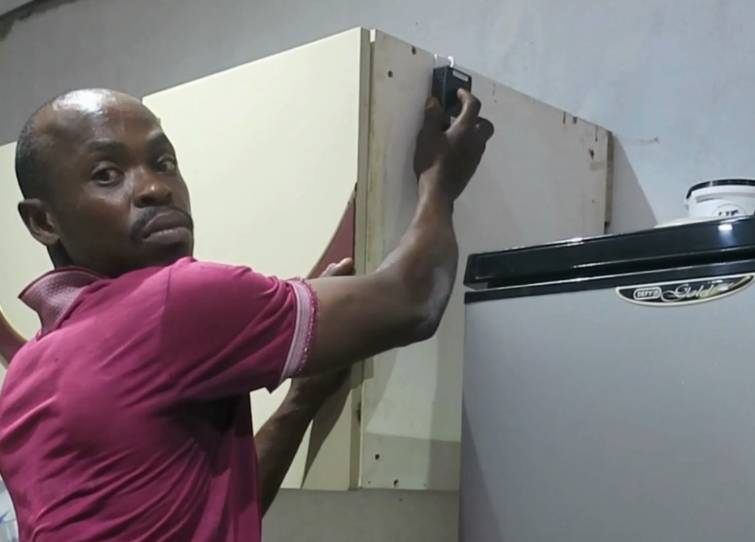
For R-NEET, our participants are young people aged 18 to 24 living in distressed communities across Gauteng Province. Installing a temperature logger in one of their homes is never just a technical task. It is a small act of trust between a fieldworker and a household, and that trust is influenced by everything else going on in that household’s life.

A fieldwork encounter

Consider a scenario that will be familiar to anyone who has done fieldwork in these communities. A fieldworker – we’ll call him Thabang – visits a participant, Anele, to install a temperature logger in Anele’s home as part of assessing heat experiences among NEET youth. Anele has consented to take part in the research, but has not told their parents (when participants are adult, parental consent is no longer mandatory). Thabang installs the logger, explains that he will return every six months to change the batteries, and that the device will remain in place for two years.

When Thabang returns, he finds the logger damaged, no longer collecting data, or missing.

This is not a rare or unusual outcome. It is, in many ways, the norm we plan around.

Why this happens

A few realities of working in low-income communities help explain what goes wrong:

  • Instruments get neglected. Young children in the house sometimes mistake the logger for a toy and play with it, altering or interrupting the data it collects.
  • Unmonitored devices get damaged. Housing in these communities is not always well protected from the weather elements, and a logger exposed to rain can be permanently damaged.
  • Non-participants interfere. Parents or other household members who were not part of the consent process may unintentionally dislodge or break the logger – for instance, while cleaning.
  • Curiosity gets the better of people. Some participants open the device to see what’s inside, and in a few cases, the batteries have been removed to power something else entirely.
  • Misinformation. Members of the household who do not know what the temperature logger is can mistake it for something malicious such as an audio, video, or monitoring device.
  • Theft. Temperature logger can be mistaken for something of value and be taken hoping to resell or use its parts.
  • Relocation. Some participants and families loose the temperature logger when they are relocating to a new home.
  • House renovations. Temperature logger gets misplaced when houses get a make-over.

None of this is malicious. It is simply what happens when a scientific instrument is dropped into the middle of an ordinary, complicated, resource-constrained household and community.

What it costs the research

The consequences are twofold. First, there is straightforward data loss – gaps in the record where a logger has stopped working. Second, and more insidiously, there is a threat to data integrity: every damaged or tampered-with device is one more reason for critics to question the reliability of findings built on low-cost sensors, even when the sensor itself performed exactly as designed.

What this teaches us

It is tempting, as researchers, to assume that everyone we work with is as invested in the research as we are – that participants will go out of their way to protect our equipment simply because they agreed to take part. Thabang’s experience with Anele is a reminder that this assumption doesn’t necessarily hold in communities where survival, food security, and financial pressure understandably take priority over safeguarding a sensor on the wall.

Good science in vulnerable communities has to account for this. It means designing studies – and data collection protocols – that anticipate loss and damage rather than being derailed by it. It means recognising that the “personal” and the “scientific” are not separate domains; a family’s daily life, its curious children, its leaking roof, and its competing demands on attention are all, in a very real sense, part of the data collection environment.

At the heart of scientific knowledge lies the personal. A small object like a temperature logger, sitting in a participant’s home for two years, carries that truth with it every day – and that should not be overlooked.

More R-NEET posts

R-NEET mid-term meeting

R-NEET mid-term meeting

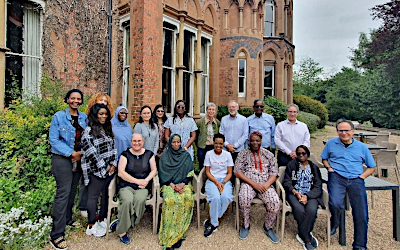
The R-NEET study team held its midterm meeting from 14 to 16 May 2026 in Nottingham (UK). Attended by R-NEET co-investigators, post-doctoral fellows, and staff, our meeting provided an important opportunity to review and celebrate project progress since inception...

Understanding Environmental Peace in the Niger Delta

Understanding Environmental Peace in the Niger Delta

My PhD proposal has been accepted, and now the work begins! My project will explore how young people in Nigeria’s Niger Delta experience environmental degradation, conflict, and hope for the future. My work focuses specifically on young adults who are not in...

NEET – By Chance or By Choice?

NEET – By Chance or By Choice?

Dr Omowumi O. Okedare and Prof Olufunmilayo I. Fawole, University of Ibadan Image made using CanvaYoung people who are Not in Education, Employment, or Training (NEET) are often viewed through a narrow lens of personal responsibility. However, the reality is more...

The hidden work that makes interdisciplinary research possible: behind the scenes of data harmonisation

Being NEET in Different Economies, and the Impact on Mental Health

Michael Ungar, PhD All over the world, a generation of young adults are in the precarious situation of not being able to launch themselves into independence. In economically more precarious parts of the world there are simply far too many youth for the small number of...

The hidden work that makes interdisciplinary research possible: behind the scenes of data harmonisation

Bongiwe Ncube shares the rationale behind her PhD project

South Africa is often celebrated as one of Africa’s most progressive democracies. Our Constitution is robust, our laws are protective on paper, and many policies aim to advance women’s rights. And yet, for many of us living these realities, the story is more...

The hidden work that makes interdisciplinary research possible: behind the scenes of data harmonisation

Reflecting on the R-NEET baseline and next steps

Author: Linda Theron, PhD., University of Pretoria, South Africa There’s something urgent, hopeful, and deeply necessary about the R-NEET study. In a world where young people are facing increasing socio-economic instability, climate threats, and mental health burdens,...

R-NEET PhD project: Faith, Cultural Legacy, and Echoes of Silence

R-NEET PhD project: Faith, Cultural Legacy, and Echoes of Silence

R-NEET PhD project: Faith, Cultural Legacy, and Echoes of Silence: Multisystemic Resilience Among Young Women in the Face of Gender-Based Violence Across Generations in Gauteng, South Africa Alberta Ofosu, Doctoral Research Assistant, University of LeicesterMy...

Africa(n) proverbs, community and resilience

Africa(n) proverbs, community and resilience

Diane Levine, Zainab Mai-Bornu, Alberta Ofosu, Morenike Oyenubi (University of Leicester)Image generated with Canva AI: A bunch of palm nutsIn his lovely 2023 article on the ways in which we might be able to make the most of proverbial wisdom from indigenous Africa(n)...

My R-NEET blog

My R-NEET blog

Hi, my name is Kudzayi Badisi, and welcome to my R-NEET blog post, where I share my journey in creating an R-NEET video to help us recruit more participants to the project. As an unemployed young person and a Youth Advisory Committee member of R-NEET, I was given the...

The hidden work that makes interdisciplinary research possible: behind the scenes of data harmonisation

What protects young adults against depression?

Prof Dov Stekel, University of Nottingham Depression among young adults (aged 18 to 29) is becoming more common around the world, especially during the challenging years of becoming independent, finding work, and navigating adult responsibilities. Our recent article,...

Making Data FAIR: How R-NEET Ensures Ethical and Open Research

Making Data FAIR: How R-NEET Ensures Ethical and Open Research

Prof Olafunmilayo Fawole, University of Ibadan, Co-Chair Data Safety and Monitoring Board. In the R-NEET project, we recognize the importance of handling, processing, and storing data responsibly. With a large, international, and interdisciplinary research team, we...

IAYMH2025 Conference, Vancouver

IAYMH2025 Conference, Vancouver

The International Association for Youth Mental Health (IAYMH2025) is a conference that brings people from all over the world together with a focus on turning the tide and creating a global blueprint for prevention and integrated care in Youth Mental Health. The...

Exploring Creative Research Methods

Exploring Creative Research Methods

Our team has grown considerably over the past six months, and at the same time we have started to identify some common training needs. Fanfare, then, for the National Centre for Research Methods offering a six-week, online course on creative methods at exactly the...

Optimism plus opportunity is a great foundation for resilience

Optimism plus opportunity is a great foundation for resilience

Michael Ungar, PhD, Resilience Research Centre, Dalhousie University, Halifax, Canada Drawings from Octopus Island, a forthcoming comic by Dr Osarenkhoe Ogbeide, New Africa Comics and University of Cambridge (permission granted) Optimism can be a powerful predictor of...

Reflections on laying the foundations for research in Nigeria

Reflections on laying the foundations for research in Nigeria

Leading the Nigerian team and working closely with the Youth Advisory Committee (YAC) has been a transformative experience. For too long, young people aged 18–24 have been denied a meaningful voice in Nigeria, particularly in the Niger Delta. Through direct engagement...

Share This