Community partners and youth advisors are key research partners in the R-NEET team. In this blog, the South African community partners – REPSSI and SADAG – reflect on the many blessings that youth advisors bring to a research study.
In the R-NEET study, youth advisors are young people whose personal experience means they are experts at what it takes to experience resilience when a young person is excluded from employment, education or training. And, they share that expertise willingly.
As negotiated at the start of the R-NEET study, youth advisors meet community partners and university researchers for a day-long meeting once every three months. While there is time for fun and laughter, and celebrating project milestones, most of the day is spent talking about how to turn R-NEET project glitches and challenges into successes.
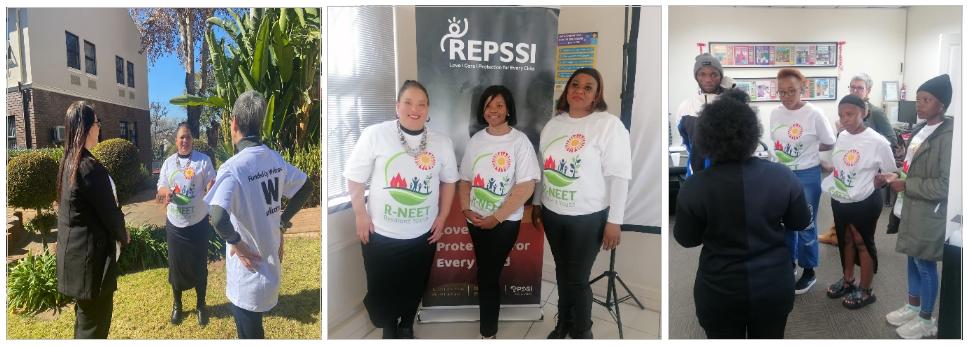
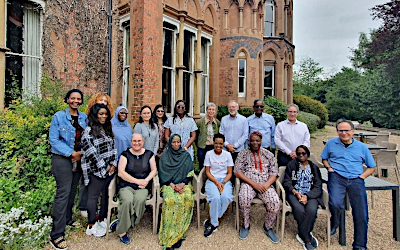
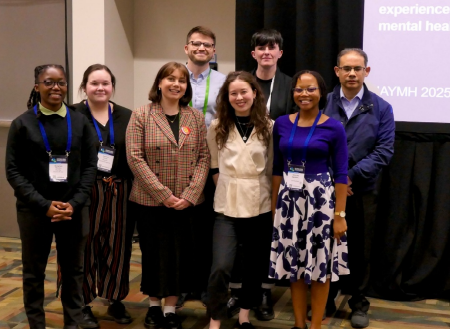
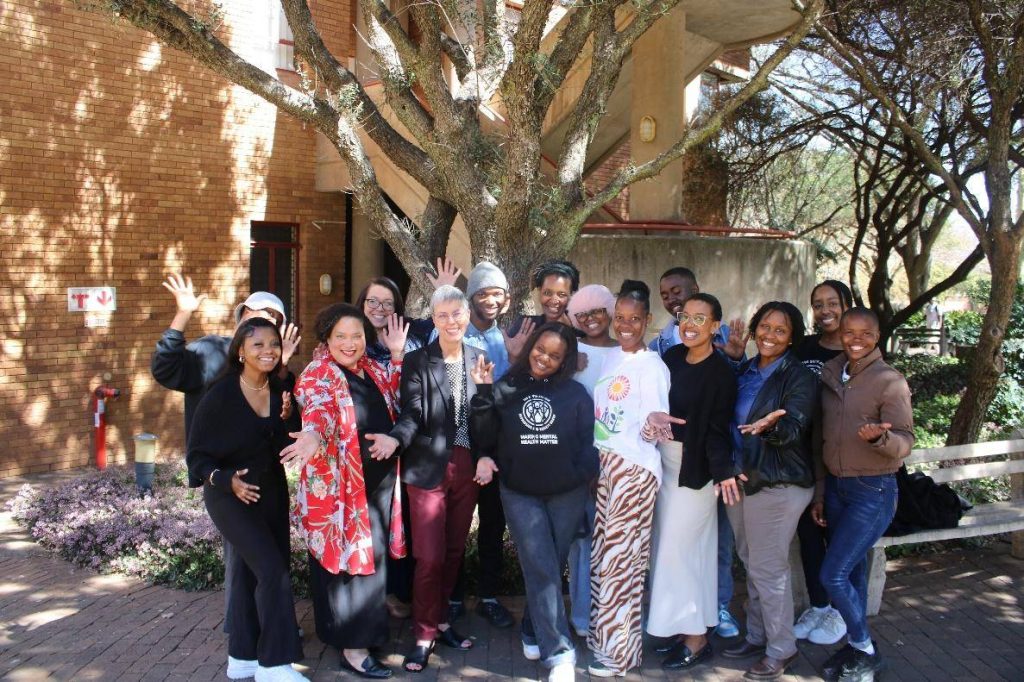
R-NEET PI, REPSSI, SADAG and youth advisors at a YAC meeting
Lived experience expertise
Drawing on their expert perspectives of having been NEET and negotiating NEET challenges, youth advisors have been key to R-NEET progress. Youth advisors changed how we recruited participants. They shaped what questions we asked in the RNEET survey and in arts-based activities. They helped and continue to help us understand what the data were saying about depression and resilience.
And, they inspired and continue to inspire us.
During some of the most challenging times of the study’s operationalization, meeting with the youth advisors and witnessing their ongoing resilience, kept us going. They also inspired us to serve youth better. We hope that their reflections will encourage more organizations that serve youth to involve youth advisors in decisions that affect young people and to learn from them in how best to support youth resilience.
REPPSI reflection: “Being part of something great makes you great.”- Rachel Berry, Glee.
While this quote from Glee may not be the most scientific reference, it perfectly captures what participation in the R-NEET study has meant for REPSSI South Africa and the broader REPSSI network.
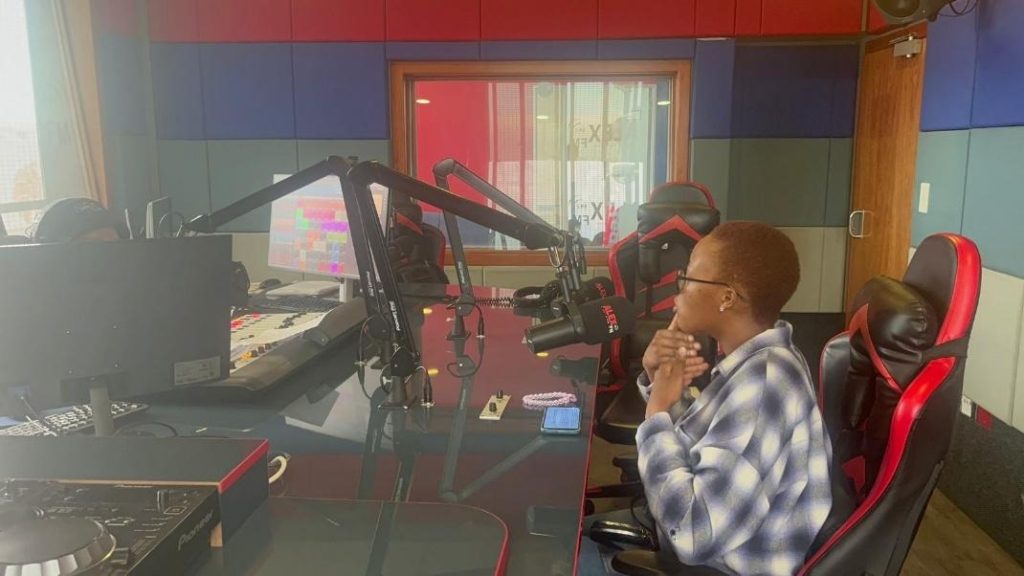
Youth advisor sharing study information on a local community radio
REPSSI has long championed child participation through programmes such as the Kids Club leadership initiative, which places young people at the centre of community engagement. However, partnering with the University of Pretoria on the R-NEET study deepened and expanded this commitment in powerful ways. As a community partner in the study, REPSSI played three key roles: establishing a Youth Advisory Committee (YAC), recruiting participants for the research, and contributing a community-based Mental Health and Psychosocial Support (MHPSS) perspective to the research process.
The formation of the YAC became one of the most transformative aspects of this collaboration. By creating a platform where young people could contribute their lived experience and shape the direction of the research, the study reinforced the importance of meaningful youth participation. For REPSSI South Africa, witnessing young people actively inform research decisions inspired a shift across the organisation—from programming to governance—towards deeper inclusion of voices with lived experience.
This shift has had ripple effects throughout REPSSI’s work. Young people have contributed to the design of migrant mental health programmes, helped develop proposals for projects addressing mental health, sexual and reproductive health and rights (SRHR), and gender-based violence prevention in communities such as Diepsloot. REPSSI has even begun exploring the creation of a Beneficiary Advisory Board to inform governance and ensure that organisational decision-making reflects the realities of those the organisation serves.
The impact has extended beyond South Africa. Inspired by the Youth Advisory Committee model, REPSSI country offices in Kenya, Zambia, and Zimbabwe have begun exploring youth advisory structures to support governance and programme development. This reflects a growing recognition that young people are not only beneficiaries of programmes—they are experts in their own lived realities.
The R-NEET study also introduced valuable methodological insights. Participatory research tools such as transect walks, Photovoice, and youth-led video documentation reminded the REPSSI team of the power of creative, community-based research methods. These approaches not only generate rich data but also empower young people as advocates and storytellers within their communities.
Perhaps most importantly, the collaboration strengthened REPSSI’s ability to link research with its long-standing wellbeing framework. For years, REPSSI has used the eight dimensions of wellbeing to guide its mental health and psychosocial programming. Through the R-NEET study, the organisation has gained deeper insight into how environmental factors—such as air quality and temperature—interact with mental health outcomes like depression and wellbeing, reinforcing the interconnected nature of physical, environmental, and psychosocial health.
Ultimately, the greatest lesson from the R-NEET collaboration is simple: when young people are genuinely included in research and programme design, the work becomes stronger, more relevant, and more impactful. Being part of a powerful research partnership did more than contribute to knowledge—it helped REPSSI grow, evolve, and re-imagine what truly participatory mental health programming and governance can look like.
SADAG reflection: From “Experts” to Listeners: What Young People Taught Us About Mental Health
At South African Depression and Anxiety Group, we’ve spent over 32 years working in Mental Health. We’ve built helplines, trained counsellors, run school programmes, and supported thousands of people across South Africa. So, when we joined the University of Pretoria’s RNEET Youth and Resilience Study, supported by the Wellcome Trust, we thought we knew what to expect.
We didn’t.
Because what started as a partnership focused on recruitment, awareness, and sharing research results quickly became something much bigger. Something more real.
It became about listening.
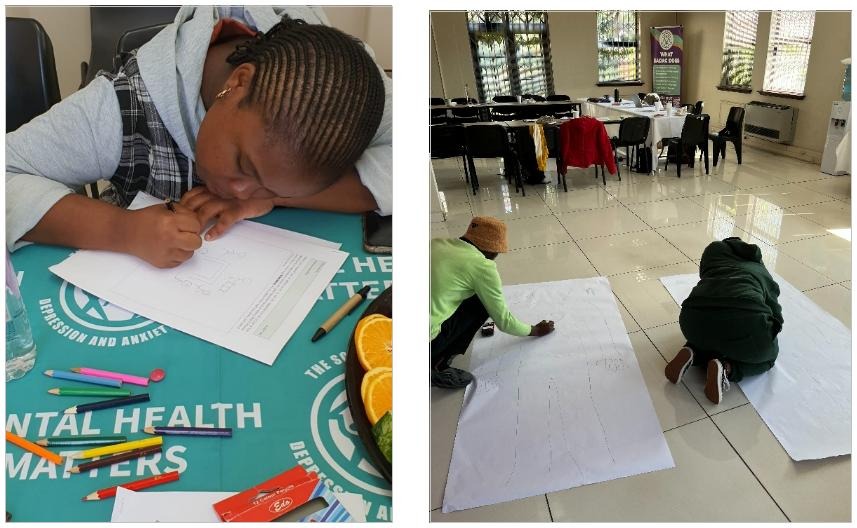
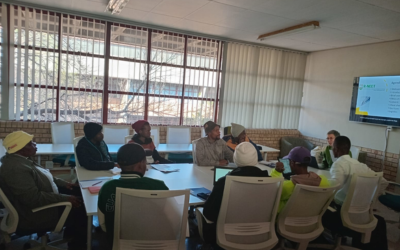
Youth advisors participating in a YAC drawing activity
The room where everything shifted
Through the RNEET Youth Advisory Committee, we sat in quarterly meetings with young people from across Gauteng – many from under-resourced communities, informal settlements, and environments shaped by unemployment, inequality, poverty, trauma and limited opportunities.
And yet, what stood out wasn’t struggle. It was perspective.
These were young people who could articulate the realities on the ground with honesty and clarity. They spoke about barriers – education, access, poverty, trauma, mental health – but their tone wasn’t hopeless. It was grounded, self-aware, and surprisingly optimistic.
They weren’t waiting for change. They were already building it.
They’re learning new skills through free online platforms. Teaching themselves video editing. Running social media pages. Creating content that speaks directly to their peers. Hustling, constantly.
And in those spaces, something shifted for us.
We came in thinking we were experts.
We left realizing we were the students.
More than participation – this was influence
What made this experience different wasn’t just that young people were “included.” It’s that their voices shaped what happened next.
They challenged how we think about engagement:
- Where do you find young people?
- What language do you use?
- What actually makes someone stop scrolling and listen?
And honestly, they didn’t just challenge us – they inspired us to do better.
To move beyond consultation.
To move into action.
Because there’s a big difference between hearing young people and actually changing what you do because of what they say.
Building something bigger at SADAG
One of the most powerful outcomes of this journey was what it sparked within SADAG itself.
We realised we couldn’t go back to “business as usual.” Not after seeing what’s possible when young people are genuinely part of the process like in the RNEET YAC.
So, in 2025, SADAG launched our own Youth Advisory Committee.
We opened applications on Youth Day via our social media pages – and the response was overwhelming. Hundreds of young people from across South Africa applied. Creatives. Leaders. Advocates. Young people who are deeply passionate about Mental Health and changing the narrative.
We selected 36 members and created structured streams where they could actively contribute:
- Helplines services
- Support Groups
- Awareness campaigns
- Research and advocacy
- Media and communications
This wasn’t symbolic. It was practical. Structured. Action-driven. And it changed us.
When young people lead, things land differently
One of the clearest examples of this was Teen Suicide Prevention Week.
Instead of designing the campaign internally, we worked closely with the Youth Advisory Committee. They shaped the messaging, the tone, and how we showed up online.
That’s how the national theme was developed for Teen Suicide Prevention Week 2026 called Silelele – “we are listening.”
And it worked. Because it was real.
The content reached thousands. Engagement was higher. The message resonated—because it came from lived experience, not assumptions.
That’s the difference.
So what did we really learn?
That young people aren’t “hard to reach.” We just haven’t been reaching them in the right way.
That resilience doesn’t always look loud – it often looks like consistency, creativity, and refusing to give up.
And that if we’re serious about Mental Health in South Africa, we cannot build solutions for young people without building them with young people.
Where to from here?
This partnership reminded us that research isn’t just about data. It’s about people. Voices. Stories. Lived realities.
And if we listen properly – really listen – it doesn’t just inform our work.
It transforms it.
At SADAG, we’re not just continuing this work – we’re expanding it. Because the future of Mental Health in South Africa isn’t something we design alone.
It’s something we build together.
With young people leading the way.