From Resilience Research to Digital Action: Empowering South Africa’s NEET Youth

May 11, 2026

By Mordecai Ndlovu
Mordecai Ndlovu is the Executive Director of the Mordecai Ndlovu Foundation, a Mentor, Coach, and Author dedicated to socio-economic transformation in South Africa.

30 June 2025 (R-NEET Mobaliser)

In the heart of South Africa’s socio-economic discourse lies a persistent, haunting acronym: NEET—Youth Not in Employment, Education, or Training. For many, it is a statistic. For the Mordecai Ndlovu Foundation (MNF), it is a call to arms. As we reflect on our journey from 2024 to the present, it is clear that moving the needle on youth unemployment requires more than just goodwill; it requires a fusion of rigorous research, strategic incubation, and a return to our roots.

The Science of Resilience: Lessons from Gauteng

In 2024, our foundation had the privilege of collaborating on the groundbreaking R-NEET (Resilient Youth NEET) study. Led by the distinguished Professor Linda Theron from the University of Pretoria and funded by Wellcome Trust, this multidisciplinary study focused on youth in Gauteng, South Africa’s economic hub, as well as Nigeria.

The study sought to answer a critical question: Which multisystemic combination of resources protects African youth against depression and exclusion? According to the Resilient Youth (R-NEET) Project, resilience is not just “grit”; it is a process supported by biological, psychological, social, and environmental systems.

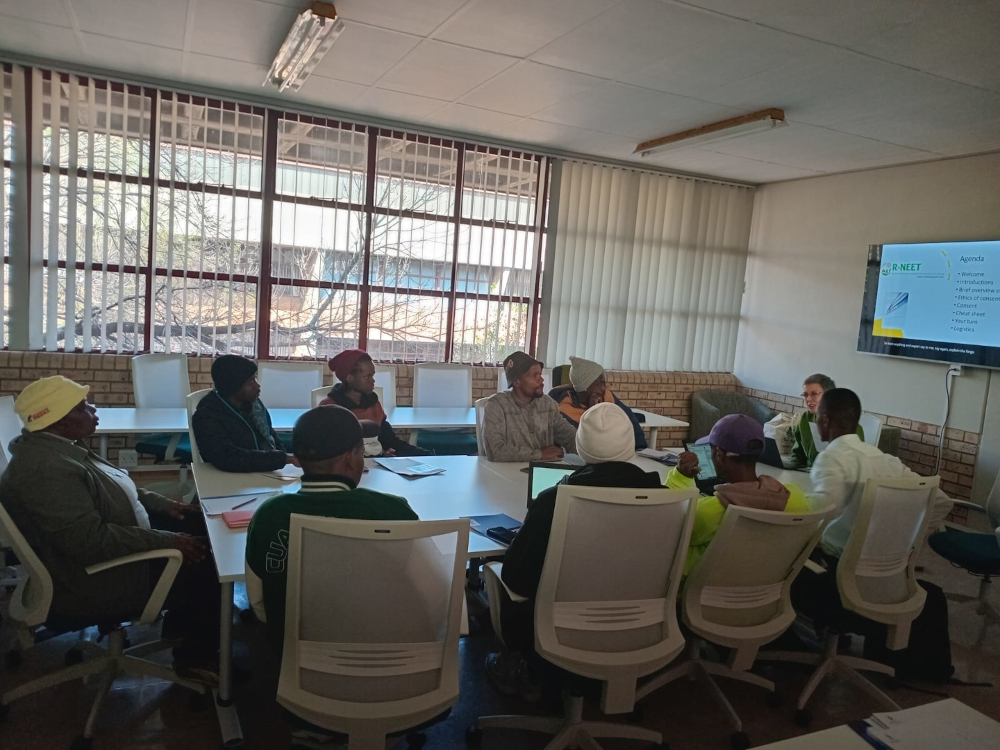
The challenge in Gauteng was immense: reaching significant recruitment targets within a compressed timeframe in densely populated urban and peri-urban areas. Our solution was the birth of the R-NEET Mobilizers. By mobilizing youth to lead the recruitment and peer-engagement process, we didn’t just meet our targets reaching approximately 700 new participants in just 14 days. we proved the study’s core philosophy: when you give a young person a sense of agency, they become the “knowledge producers” and the solution to the very challenges they face.

2025: The Year of Project Revitalized

Building on the momentum of the Gauteng study, 2025 became our year of strategic implementation through Project Revitalized. Recognizing that small non-profits are the lifeblood of our communities, we organized a series of National Youth Service (NYS) NPO Incubators.
These incubators developed the “opportunity-spotting” muscle of local organizations. By mentoring NPOs on how to identify funding, navigate digital tools, and manage large-scale interventions, we ensured that the MNF wasn’t just a single tree, but part of a growing forest of capable community partners. This work has been bolstered by our close collaboration with strategic partners and thought leaders like Mzwandile Msimanga, ensuring our programs are aligned with national rights and equality frameworks.

The Mission in Ehlanzeni: A Call for 500 Pioneers

Today, the mission has brought me back to where it all began. Having been born in Mbombela, returning to Mpumalanga is a deeply personal homecoming. My journey as an author, a contracted NYDA mentor, and an Ekasi Entrepreneur facilitator has always been about one thing: equipping the “underdog” with the tools to win.
Currently, the Mordecai Ndlovu Foundation is on a high-stakes mission in this proposal expands delivery across Mpumalanga Province, with an initial focus on Enhlanzeni District and scalable rollout to additional districts. We are applying the lessons learned from the R-NEET research in Gauteng to empower 500 NEET youth in Mpumalanga. We are not just teaching them to “find jobs”—we are teaching them to create opportunities.

Through our latest strategic submissions, we hope to share outcomes soon that will unlock the opportunity for these 500 young people to join our new program. This initiative will establish:

  • Digital Health Ambassadors: Active citizens bridging healthcare gaps through digital triage support.
  • Technopreneurs: Youth mastering the digital tools of the future to serve their grassroots communities.

By using digital platforms to bridge service gaps, these youth will prove that the digital economy knows no geographic bounds—from the streets of Gauteng to the hills of Ehlanzeni.

A Call to Action

The transition from “NEET” status to “Active Citizen” is both a psychological and economic shift. As the R-NEET research suggests, we must stop viewing our youth as a liability and start seeing our collective responsibility to work with youth to reach their potential. At the Mordecai Ndlovu Foundation we believe this means working together to position youth as the primary drivers of the 4th Industrial Revolution at a local level.
As I settle back into the soil of Mpumalanga, my commitment to the people of this province is unwavering. We have the research from Gauteng. We have the digital tools. We have the strategic partners. Now, we are looking for the 500 pioneers in Mpumalanga who are ready to lead.

References & Resources:

• Theron, L. C. Resilient Youth (R-NEET) Project.
• Msimanga, M. Professional Profile & Community Impact.


 

More R-NEET posts

NEET – By Chance or By Choice?

NEET – By Chance or By Choice?

Dr Omowumi O. Okedare and Prof Olufunmilayo I. Fawole, University of Ibadan Image made using CanvaYoung people who are Not in Education, Employment, or Training (NEET) are often viewed through a narrow lens of personal responsibility. However, the reality is more...

From Paper to Video: The Promise and Problems of AI-Generated Research Content

Being NEET in Different Economies, and the Impact on Mental Health

Michael Ungar, PhD All over the world, a generation of young adults are in the precarious situation of not being able to launch themselves into independence. In economically more precarious parts of the world there are simply far too many youth for the small number of...

From Paper to Video: The Promise and Problems of AI-Generated Research Content

Bongiwe Ncube shares the rationale behind her PhD project

South Africa is often celebrated as one of Africa’s most progressive democracies. Our Constitution is robust, our laws are protective on paper, and many policies aim to advance women’s rights. And yet, for many of us living these realities, the story is more...

From Paper to Video: The Promise and Problems of AI-Generated Research Content

Reflecting on the R-NEET baseline and next steps

Author: Linda Theron, PhD., University of Pretoria, South Africa There’s something urgent, hopeful, and deeply necessary about the R-NEET study. In a world where young people are facing increasing socio-economic instability, climate threats, and mental health burdens,...

R-NEET PhD project: Faith, Cultural Legacy, and Echoes of Silence

R-NEET PhD project: Faith, Cultural Legacy, and Echoes of Silence

R-NEET PhD project: Faith, Cultural Legacy, and Echoes of Silence: Multisystemic Resilience Among Young Women in the Face of Gender-Based Violence Across Generations in Gauteng, South Africa Alberta Ofosu, Doctoral Research Assistant, University of LeicesterMy...

Africa(n) proverbs, community and resilience

Africa(n) proverbs, community and resilience

Diane Levine, Zainab Mai-Bornu, Alberta Ofosu, Morenike Oyenubi (University of Leicester)Image generated with Canva AI: A bunch of palm nutsIn his lovely 2023 article on the ways in which we might be able to make the most of proverbial wisdom from indigenous Africa(n)...

My R-NEET blog

My R-NEET blog

Hi, my name is Kudzayi Badisi, and welcome to my R-NEET blog post, where I share my journey in creating an R-NEET video to help us recruit more participants to the project. As an unemployed young person and a Youth Advisory Committee member of R-NEET, I was given the...

From Paper to Video: The Promise and Problems of AI-Generated Research Content

What protects young adults against depression?

Prof Dov Stekel, University of Nottingham Depression among young adults (aged 18 to 29) is becoming more common around the world, especially during the challenging years of becoming independent, finding work, and navigating adult responsibilities. Our recent article,...

Making Data FAIR: How R-NEET Ensures Ethical and Open Research

Making Data FAIR: How R-NEET Ensures Ethical and Open Research

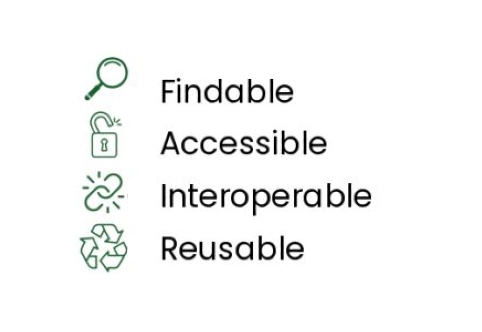
Prof Olafunmilayo Fawole, University of Ibadan, Co-Chair Data Safety and Monitoring Board. In the R-NEET project, we recognize the importance of handling, processing, and storing data responsibly. With a large, international, and interdisciplinary research team, we...

IAYMH2025 Conference, Vancouver

IAYMH2025 Conference, Vancouver

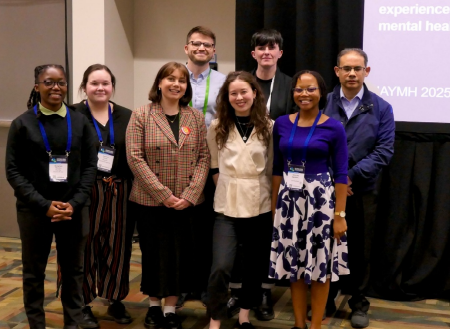
The International Association for Youth Mental Health (IAYMH2025) is a conference that brings people from all over the world together with a focus on turning the tide and creating a global blueprint for prevention and integrated care in Youth Mental Health. The...

Exploring Creative Research Methods

Exploring Creative Research Methods

Our team has grown considerably over the past six months, and at the same time we have started to identify some common training needs. Fanfare, then, for the National Centre for Research Methods offering a six-week, online course on creative methods at exactly the...

Optimism plus opportunity is a great foundation for resilience

Optimism plus opportunity is a great foundation for resilience

Michael Ungar, PhD, Resilience Research Centre, Dalhousie University, Halifax, Canada Drawings from Octopus Island, a forthcoming comic by Dr Osarenkhoe Ogbeide, New Africa Comics and University of Cambridge (permission granted) Optimism can be a powerful predictor of...

Reflections on laying the foundations for research in Nigeria

Reflections on laying the foundations for research in Nigeria

Leading the Nigerian team and working closely with the Youth Advisory Committee (YAC) has been a transformative experience. For too long, young people aged 18–24 have been denied a meaningful voice in Nigeria, particularly in the Niger Delta. Through direct engagement...

NEETs need strengths and supports to be mentally well

NEETs need strengths and supports to be mentally well

10 October marks World Mental Health Day. This year the focus was on mental health in the workplace. But, what about the mental health of the many people who are not employed? Likewise, what about the mental health of those who not in employment, education or training...

Share This