
When people picture climate and health research, they usually imagine scientists in laboratories, or perhaps community meetings where findings are shared back with participants. Few people picture a small white or black sensor, no bigger than a matchbox, sitting quietly on a wall inside someone’s home for two years, doing the unglamorous but essential work of measuring heat.
In the SAMRC’s Climate Change and Human Health research programme, that sensor is where a great deal of our work begins. South Africa’s heat is intensifying, and its effects fall hardest on the people who can least afford to escape it. To understand how the vulnerable experience and adapt to heat, we first need reliable data – and reliable data starts with an object as ordinary as a temperature logger.
A small object with a big job
The logger we use to collect temperature and relative humidity data (also in the R-NEET study) is inexpensive by international standards, developed locally rather than imported, and remarkably capable for its size. Once installed in a participant’s home, it can passively record data for up to 24 months, needing only a battery change every six months. Low-cost does not mean unreliable – but it does mean the device is small, unobtrusive, and, as we’ve learned, easy to overlook.
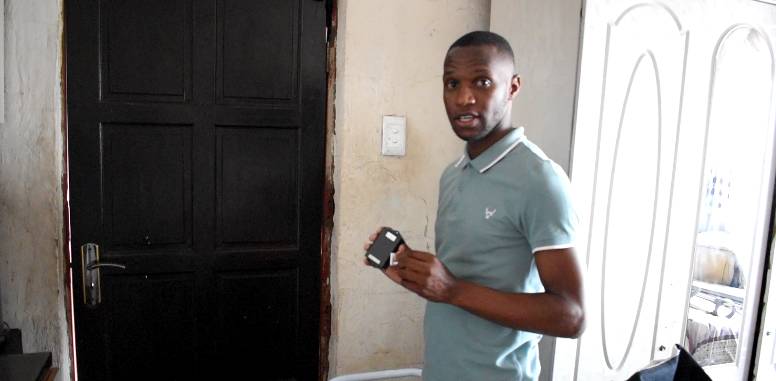
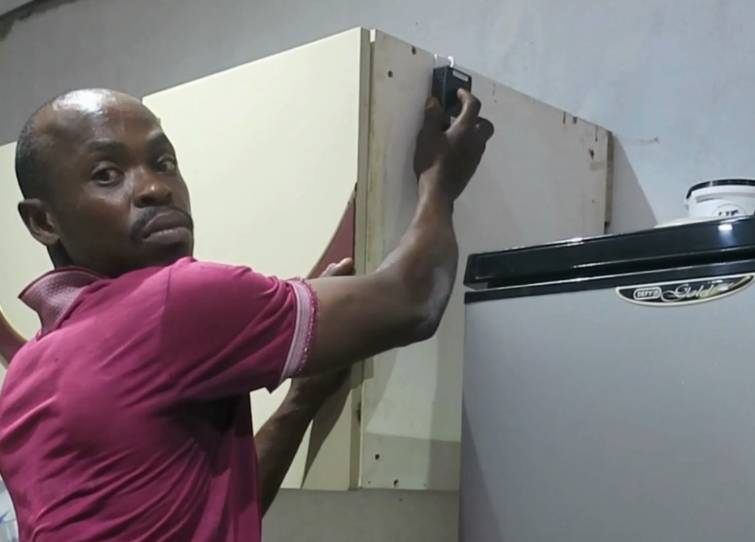
For R-NEET, our participants are young people aged 18 to 24 living in distressed communities across Gauteng Province. Installing a temperature logger in one of their homes is never just a technical task. It is a small act of trust between a fieldworker and a household, and that trust is influenced by everything else going on in that household’s life.
A fieldwork encounter
Consider a scenario that will be familiar to anyone who has done fieldwork in these communities. A fieldworker – we’ll call him Thabang – visits a participant, Anele, to install a temperature logger in Anele’s home as part of assessing heat experiences among NEET youth. Anele has consented to take part in the research, but has not told their parents (when participants are adult, parental consent is no longer mandatory). Thabang installs the logger, explains that he will return every six months to change the batteries, and that the device will remain in place for two years.
When Thabang returns, he finds the logger damaged, no longer collecting data, or missing.
This is not a rare or unusual outcome. It is, in many ways, the norm we plan around.
Why this happens
A few realities of working in low-income communities help explain what goes wrong:
- Instruments get neglected. Young children in the house sometimes mistake the logger for a toy and play with it, altering or interrupting the data it collects.
- Unmonitored devices get damaged. Housing in these communities is not always well protected from the weather elements, and a logger exposed to rain can be permanently damaged.
- Non-participants interfere. Parents or other household members who were not part of the consent process may unintentionally dislodge or break the logger – for instance, while cleaning.
- Curiosity gets the better of people. Some participants open the device to see what’s inside, and in a few cases, the batteries have been removed to power something else entirely.
- Misinformation. Members of the household who do not know what the temperature logger is can mistake it for something malicious such as an audio, video, or monitoring device.
- Theft. Temperature logger can be mistaken for something of value and be taken hoping to resell or use its parts.
- Relocation. Some participants and families loose the temperature logger when they are relocating to a new home.
- House renovations. Temperature logger gets misplaced when houses get a make-over.
None of this is malicious. It is simply what happens when a scientific instrument is dropped into the middle of an ordinary, complicated, resource-constrained household and community.
What it costs the research
The consequences are twofold. First, there is straightforward data loss – gaps in the record where a logger has stopped working. Second, and more insidiously, there is a threat to data integrity: every damaged or tampered-with device is one more reason for critics to question the reliability of findings built on low-cost sensors, even when the sensor itself performed exactly as designed.
What this teaches us
It is tempting, as researchers, to assume that everyone we work with is as invested in the research as we are – that participants will go out of their way to protect our equipment simply because they agreed to take part. Thabang’s experience with Anele is a reminder that this assumption doesn’t necessarily hold in communities where survival, food security, and financial pressure understandably take priority over safeguarding a sensor on the wall.
Good science in vulnerable communities has to account for this. It means designing studies – and data collection protocols – that anticipate loss and damage rather than being derailed by it. It means recognising that the “personal” and the “scientific” are not separate domains; a family’s daily life, its curious children, its leaking roof, and its competing demands on attention are all, in a very real sense, part of the data collection environment.
At the heart of scientific knowledge lies the personal. A small object like a temperature logger, sitting in a participant’s home for two years, carries that truth with it every day – and that should not be overlooked.