South Africa is often celebrated as one of Africa’s most progressive democracies. Our Constitution is robust, our laws are protective on paper, and many policies aim to advance women’s rights. And yet, for many of us living these realities, the story is more complicated. Discrimination, harassment, bullying, criminalization, stigma, and denial of services persist. These violations of basic human rights show up in everyday life.
For emerging adult women (ages 18–29) who don’t conform to heteronormativity (that is women who are lesbian, bisexual, queer, or fluid) these challenges are intensified. We navigate homophobia, gender-based violence, and patriarchal systems while also managing the developmental pressures of early adulthood: forming identity, living more independently (often with less support), and negotiating family and cultural expectations. These pressures are magnified when healthcare and social services are designed primarily with heterosexual people in mind. They are magnified again for Black women.
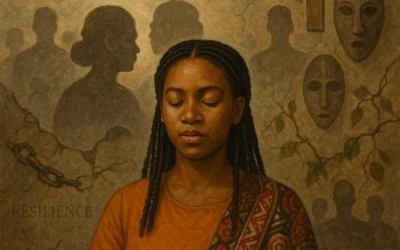
And yet, despite all of this, many Black sexual-minority women in South Africa find ways to adapt and cope well. That capacity to “do well” in the face of significant stress is what scholars call resilience. My PhD is about understanding how we do it and what makes it possible, so that support systems can be designed to match our real lives.
Although there’s an increasing body of research on youth resilience across sub-Saharan Africa, the resilience of Black emerging adult women who identify as sexual minorities is still underreported. Too often, studies focus on what’s going wrong, not on how people are coping and what helps. When the conversation centres only on risk, it becomes easy for practitioners and policymakers to overlook the supports that actually work for us—and to miss how our social identities shape both our risks and our access to help.
My study asks a primary question:
How do Black emerging adult women in South Africa who identify as sexual minorities cope well with the risks associated with their social identities (race, gender, sexual identity, and social class)?
To unpack that, I’m asking:
- What challenges do we face in daily life?
- Which resources—personal, relational, cultural, community, institutional, or environmental—help us cope well?
- How do our intersecting identities influence both our experiences of risk and our access to meaningful, resilience-enabling resources?
Two ideas shape my approach. Intersectionality says our identities don’t operate in isolation. Being Black, being a woman, being a sexual minority, and one’s social class intersect, and systems of power such as racism, sexism, and heterosexism interact with those identities to amplify risk or gate-keep access to support. Multisystemic resilience says resilience isn’t only about inner strength. It’s about a network of resources—biological, psychological, relational, socio-cultural, institutional, and environmental—that interact with our context. In other words, a single “fix” won’t do. We need to understand the mix of supports that actually enable us to adapt and thrive.
I’m interested in lived experience and the meanings women make from it. Because research on this specific group is limited, my work is designed to open up rich, nuanced accounts rather than force them into predefined boxes. I plan to work with 15–20 Black emerging adult women (18–29) living in South Africa who identify as lesbian, bisexual, queer, or fluid, and who demonstrate resilience in everyday life (for example, by continuing studies, working, or contributing meaningfully at home). I’ll use two complementary methods:
- Interviews using a semi-structured protocol (in-person, phone, or online—participants choose what feels safe and practical). Open-ended prompts will invite stories about challenges, coping, and the resources that matter.
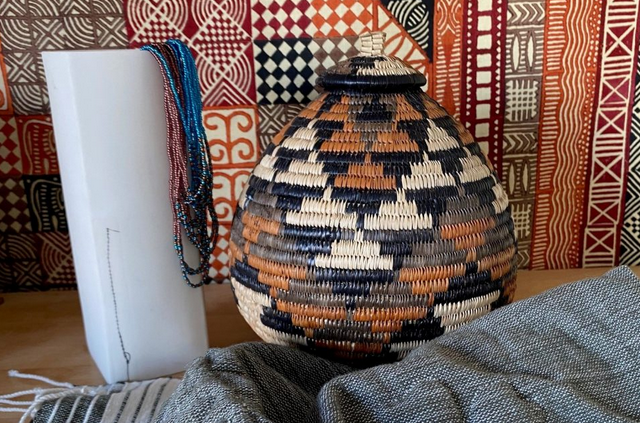
- Photo-elicitation. Participants will choose or take a small set of photos that represent who they are and how they cope well with intersecting challenges. We’ll then talk through those images. Images often unlock memories and meanings that words alone don’t capture; they also centre the participant’s voice and agency. I provide clear guidance to protect privacy, consent, and copyright.
I hope this work will map the resource networks that enable resilience across systems, and explain how identity shapes access to those resources – who gets welcomed, who gets turned away, and why. My longer term intention is for my work to guide policy and practice so mental-health services, community programs, and campuses design supports that are affirming, accessible, and effective for Black sexual-minority emerging adult women.